I analyse how climate shocks affect economies, regions and public responses, using economic modelling and empirical data to inform policy and decision-making.
I am a climate economist working on the economic, distributional and behavioural consequences of climate
change. My PhD at Maastricht University examines how extreme weather events affect regional economies, public
perceptions and climate-policy responses using economic modelling, econometrics, natural language processing
and survey data.
My broader experience spans energy policy, energy-system modelling and urban
sustainability projects. I have worked on applied projects involving public-sector and research organisations,
including RIVM, the City of Rotterdam and EU-funded energy-transition initiatives.
I am particularly interested in applied roles where quantitative analysis can support climate policy,
climate-risk assessment, energy transition and strategic decision-making.
Using newspaper text analysis and a representative post-event survey
from the 2023 Emilia-Romagna floods, this paper examines how media and
residents assign responsibility for extreme weather and how these
narratives relate to climate mitigation behaviour.
Natural Language ProcessingSurvey AnalysisClimate CommunicationExtreme Weather
This project extends the DSK stock-flow consistent agent-based
macroeconomic model to multiple regions and integrates opinion
dynamics to study how heterogeneous climate shocks shape regional
inequality, climate policy support, and macroeconomic recovery.
Evaluation of six sustainable-heating co-creation pilots across
Belgium, the Netherlands, France, and the UK, examining behavioural
change, investment mobilisation, implementation, and opportunities
for scaling local heat-transition initiatives.
Energy TransitionCo-creationMonitoring & Evaluation
This study uses agent-based modelling to examine how mixed energy
communities comprising households and non-residential users can use
demand response to increase local self-sufficiency and reduce
dependence on the electricity grid.
I teach undergraduate courses in economics, sustainable development,
and international business at Maastricht University, alongside
supervising bachelor theses in economics and emerging markets.
Examines sustainable development through economic, ecological, and
socio-cultural perspectives, combining analytical frameworks with
case studies, group discussions, and applied decision-making.
Explores the position of emerging economies in the global economy,
including trade, foreign direct investment, financial globalisation,
environmental regulation, migration, and geopolitics.
TutorBachelor Economics & Business Economics2024–25
Covers international trade, exchange rates, open-economy
macroeconomics, trade policy, global inequality, and the role of
international institutions in the global economy.
Uses interactive market simulations to help students connect
consumer, producer, and trader behaviour with economic theory and
observed market outcomes.
TutorBachelor Course2022–23
Presentation Skills
Develops concise and engaging academic communication through formats
including PechaKucha presentations, elevator pitches, and
TED-style storytelling.
I shared early results from my working paper at the SAIS Europe workshop on climate action in Italy.
Reflections from the SAIS Workshop on Climate Action in Italy
Conferences and Workshops | April 2024
Earlier this month, I had the opportunity to participate in the workshop “Political and Legal Opportunities and Obstacles to Climate Action in Italy” hosted by the Johns Hopkins School of Advanced International Studies (SAIS Europe) in Bologna.
During a session focused on Italian perspectives on climate change, I presented some early findings from my working paper. The discussion that followed was insightful and energizing — it was a privilege to engage with such a thoughtful and diverse audience of scholars and practitioners.
Here are snapshot from the workshop:
Client:
Johns Hopkins SAIS
Date:
April 2024
Service:
Conferences and Workshops
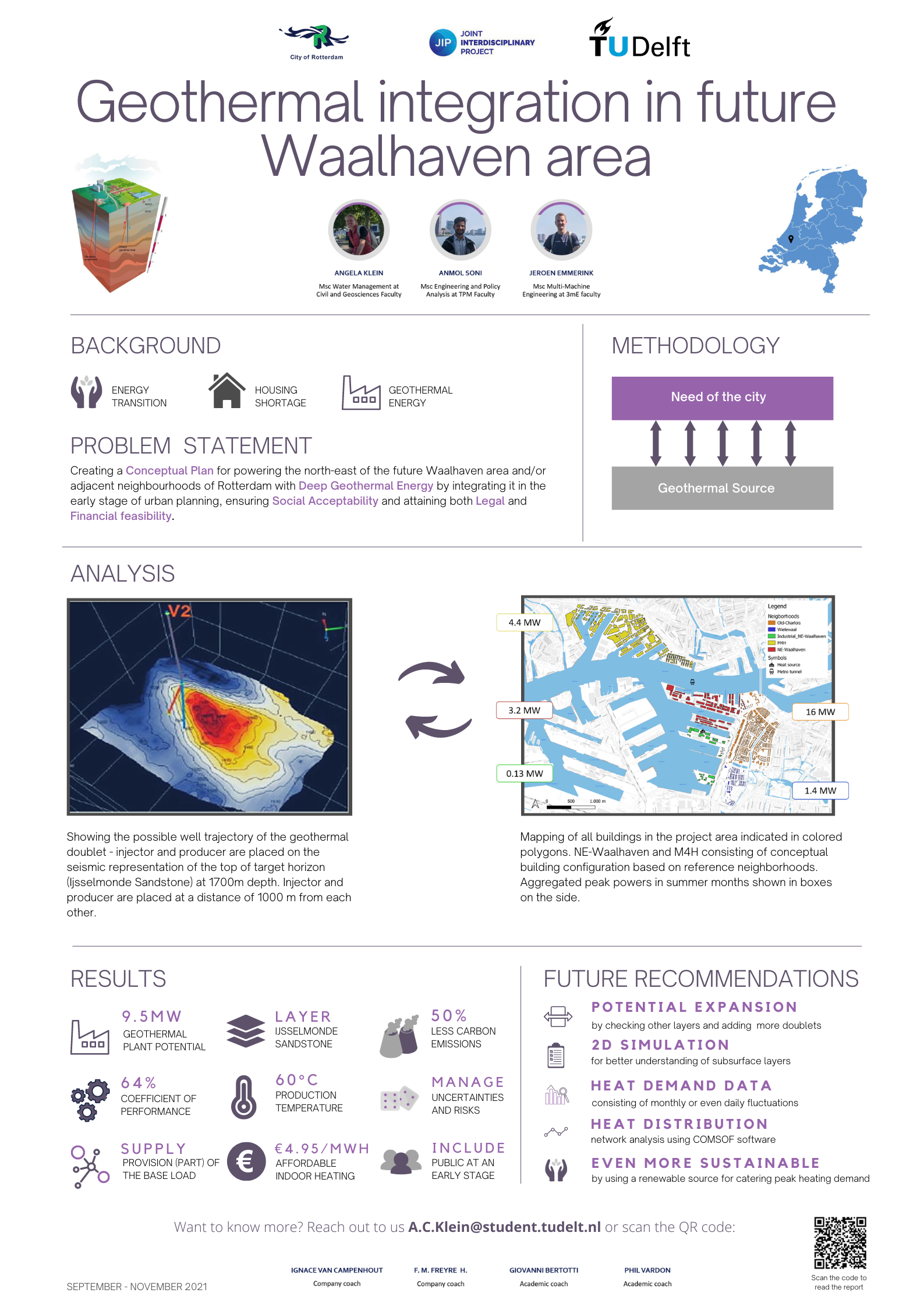
Developed a roadmap for integrating geothermal energy in the urban planning process of Rotterdam’s Waalhaven area, combining technical feasibility, social engagement, and public perception management.
Roadmap for Integration of Geo-Thermal Energy in Rotterdam
Project | 2021–2022
This project was a part of a Joint Interdisciplinary Project organized by TU Delft in the academic year 2021-22. The
course brought students from different academic backgrounds together to solve real-world problems. I teamed up with
Jeroen Emmerik and Angela Klein, who are studying M.Sc. Multi-Machine Engineering and M.Sc. Water Management at TU
Delft, respectively. Our team was interdisciplinary and intercultural, making this experience even more rewarding. We
worked with Gemeente Rotterdam (Municipality of Rotterdam) to create a roadmap for integrating geo-thermal energy into
future urban development projects planned in the Waalhaven area of Rotterdam, Netherlands.
Waalhaven is part of the old harbor area that is proposed to be converted into a residential area to tackle the housing
crisis in the region. This area is also rich in geothermal resources that can be used for residential heating, reducing
dependency on gas import. However, there is still a lot of misinformation around geothermal energy, leading to negative
public perception. Additionally, identifying the technology, capacity, scale, and location required for the plant is
quite challenging at a later stage of urban development. Therefore, to optimize the potential of geothermal energy, its
application should be integrated with urban planning. This project tackled all the aforementioned challenges by creating
a roadmap for integrating geothermal energy into urban planning.
Project outcomes
Clear roadmap presented to city planners, identifying optimal integration points for geothermal plants in Waalhaven.
Communication strategy drafted to improve local acceptance and correct misconceptions surrounding geothermal energy.
Poster presentation created to summarize the framework and deliverables, which was shared with project stakeholders and academic peers.
This project exemplifies the power of interdisciplinary collaboration and early integration of sustainability into urban planning
My contribution to this project was an actor network scan and preparing a social engagement strategy. I also contributed
to the estimation of heating demand for the planned neighborhood.